7 Infrastructure Drift Detection Tools Compared
From manual diffing to AI-augmented audit reports: which tool fits your team's risk tolerance?
TL;DRBlog Key takeaways
• 7 Infrastructure Drift Detection Tools Compared: A comparison of drift detection tools covering Kubernetes, Terraform, AWS, Azure, and on-prem infrastructure.
• Devopsify provides a tenant-scoped control plane with governed execution and audit.
• AI assistance is read-only and proposal-based; humans approve.
• Try the pattern in demo mode with zero credentials.
Devopsify is a tenant-scoped infrastructure control plane that unifies multi-cloud inventory, topology, governed provisioning, delivery operations, audit, and AI-assisted investigation under one declarative graph. From manual diffing to AI-augmented audit reports: which tool fits your team's risk tolerance? This post examines the practical steps, trade-offs, and operational signals that make the pattern reviewable and auditable, from inventory discovery to policy evaluation and deployment waves.
What we evaluated
We evaluated drift detection tools across five dimensions: automation level (how much human intervention is required), coverage scope (which infrastructure types they detect drift for), classification quality (ability to distinguish expected vs unexpected drift), integration depth (how well they work with existing CI/CD and governance workflows), and reporting maturity (structured output suitable for audit and compliance). Each tool received a score out of 10.
1. Devopsify: Best for comprehensive drift detection
Devopsify detects drift across Kubernetes clusters, Terraform/OpenTofu state, cloud resources, and on-prem agents using scheduled audits with AI classification. It distinguishes operator-managed drift from unauthorized changes and produces structured audit reports. Score: 9.0/10.
2. ArgoCD: Best for GitOps-native teams
ArgoCD's reconciliation loop detects Kubernetes drift automatically by comparing live cluster state against Git manifests. Excellent for teams already using GitOps but limited to Kubernetes resources only. Score: 8.2/10.
3. Spacelift: Best for Terraform plan drift
Spacelift evaluates Terraform plans against policy rules and detects state drift through refresh-only analysis. Strong for IaC-focused teams but doesn't cover non-Terraform resources. Score: 7.8/10.
- 4. Datadog Infrastructure Monitoring: Real-time drift alerts via agent data (7.5/10)
- 5. New Relic Infrastructure: APM-level drift detection for application layers (7.0/10)
- 6. Pulumi Policy as Code: Drift detection through automated stack comparisons (7.2/10)
- 7. Custom kubectl scripts: Manual diffing approach, zero cost but high effort (5.0/10)
| Aspect | Without Devopsify | With Devopsify |
|---|---|---|
| Inventory | Siloed consoles | ✓ Unified graph |
| Policy | Manual review | ✓ Pre-apply gate |
| Audit | Screenshots | ✓ Per-change trail |
How does this pattern fit your operating model?
- Connect read-first via SDK adapters or on-prem agents.
- Discover drift and topology on schedule.
- Govern attach policy and approvals.
- Operate propose with AI, approve as human, execute with audit.
Common Questions
How does Devopsify ensure the pattern is auditable?
Every proposed change carries its inventory snapshot, policy result, required approvals, and execution result as one traceable record: no gaps, no screenshots.
Can I try this without credentials?
Yes. Demo mode uses labeled mock data. Walk the same inventory, policy, and AI investigation flows with zero cloud credentials.
Does AI execute changes?
No. AI investigates and proposes; humans approve and policy gates enforce. Execution is platform-only and fully audited.
References
Cover photo via Openverse under a Creative Commons license. Illustrative imagery only.
This is a pattern, not a promise.
Every story here is an illustrative implementation pattern. To verify one against your own estate, start in demo mode (zero credentials) or request guided access.
How to Detect Kubernetes Drift (3 Methods Compared)
Three methods for detecting Kubernetes configuration drift: manual kubectl diff, ArgoCD/Flux reconciliation loops, and AI-augmented audit reports.
Read the story
Backstage vs Devopsify: Platform Engineering Portal Compared
Backstage empowers developers with self-service templates. Devopsify empowers operators with governed infrastructure workflows.
Read the story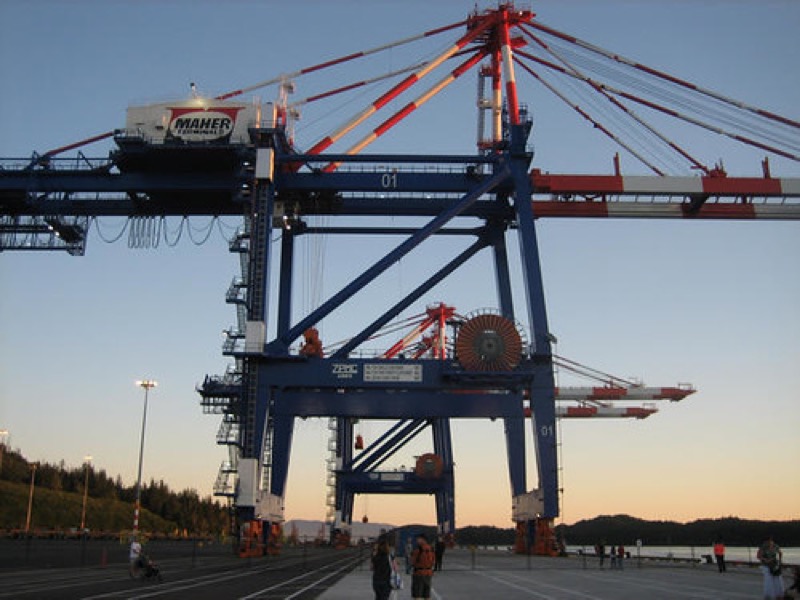
Bringing a hybrid port estate under one control plane
How a terminal operator folded cloud and on-prem racks into one inventory, turned drift reviews from a quarterly spreadsheet ritual into a weekly signal, and kept approvals human.
Read the story